

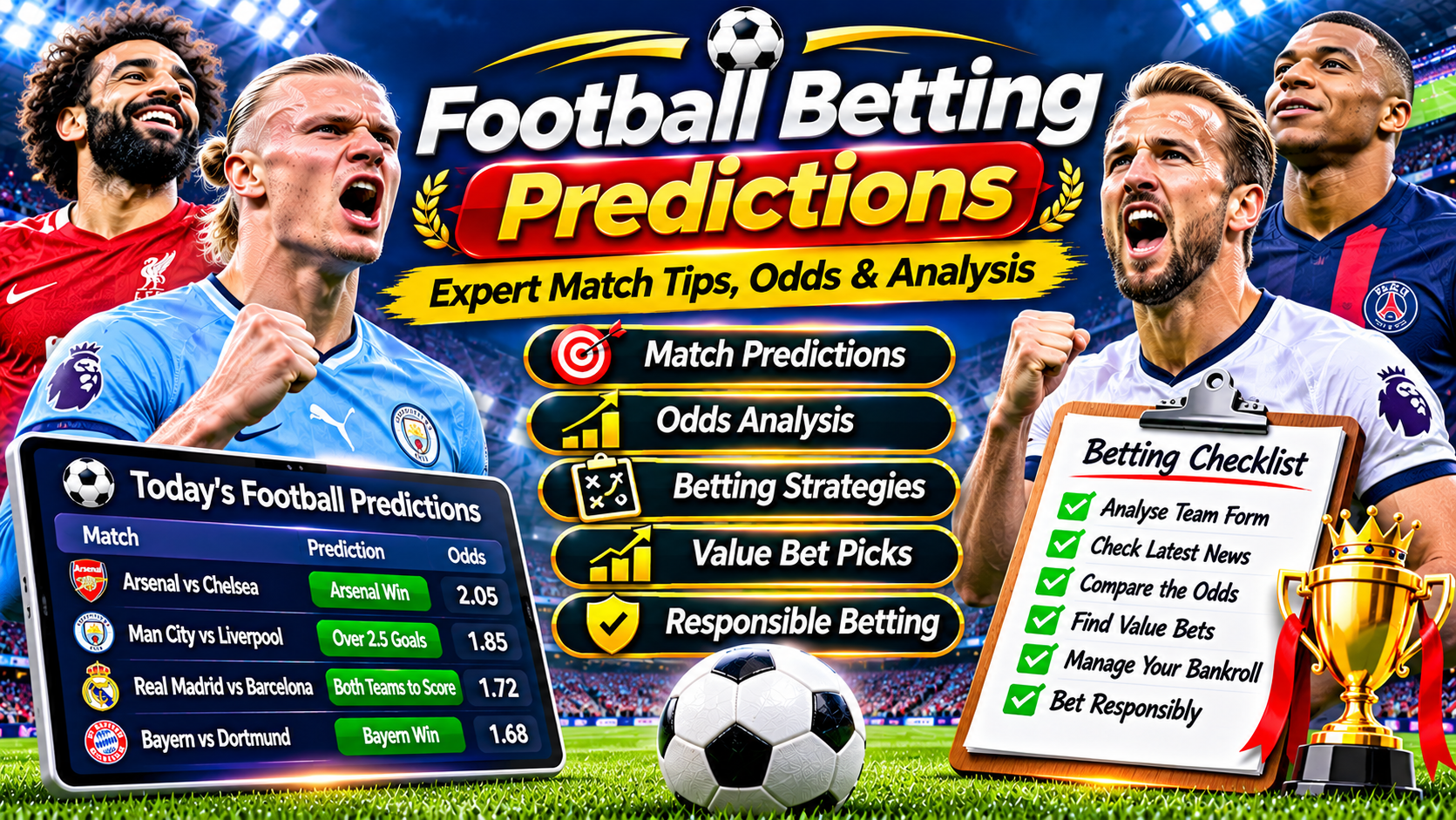
Spot the real problem behind betting swings
Many bettors chase randomness because they treat predictions like lucky guesses instead of decisions. The real problem is that most picks ignore market signals, team context, and how odds reflect collective information. When Football Betting Predictions you only look at a scoreline or a headline, you miss the factors that actually move probabilities. A disciplined approach turns “I hope” into “I can explain why.”
Another issue is overconfidence in one data source. Stats from form tables can be helpful, but they often fail to capture style matchups, player availability, and matchup-specific momentum. Injuries, tactical changes, and travel or rest patterns can shift outcomes even when standings look stable. The solution is to build a process that checks multiple angles before committing money. That’s how you reduce emotional betting and start betting with structure.
Build a solution-driven match preview workflow
Start with a matchup lens rather than a single team narrative. Examine how each side typically attacks and defends—especially the spaces they exploit and concede. If one team struggles against direct runs while the opponent thrives on transitions, your prediction should reflect that tactical edge. Then verify whether key roles are present, such as starting defenders, a reliable playmaker, or a main striker who changes how defenses set up.
Next, translate form into quality context. Consider whether recent results were driven by sustainable finishing or by luck, such as unusually high conversion rates. Look at goal creation patterns: shots from dangerous areas, chances created per possession, and defensive recoveries after turnovers. Odds movement can confirm whether the market agrees with your reading, or whether you’ve spotted a mismatch. When your preview ties tactical logic to probability, your picks become easier to defend.
Use odds, goal markets, and scenario probabilities
Value betting begins with comparing your estimated probability to the implied probability in the odds. If your model suggests a more likely outcome than the market pricing, the bet has room for positive expected value. Don’t stop at 1X2 markets; goal markets often reveal more information because they align with how teams play. For example, a side that controls territory and generates consistent chances may justify a reasonable over on total goals even if the match feels “even.”
For low-scoring matchups, focus on shapes that predict fewer clear chances. If both teams rely on cautious build-up and struggle to break lines, “unders” can be more reliable than chasing a wild result. Consider markets like both teams to score, correct score bands, and first-half goal totals to reflect game flow. You can also layer scenarios: if a favorite is missing a key attacker, their probability of scoring early may drop even if they still win later. The goal is to align your betting markets with the match narrative you built in the preview.
Manage risk with bankroll rules and responsible limits
Even strong analysis can fail, so risk management is the difference between surviving variance and chasing losses. Use a staking plan that fits your bankroll and your comfort level, such as fixed-percentage wagering rather than unpredictable “all-in” decisions. Set a maximum loss limit for each day or event, and stop when you hit it, even if you feel a correction is coming. This protects you from the most common emotional trap: betting harder to win back what you lost.
Also, treat betting as an entertainment budget, not a way to solve financial pressure. Avoid betting when you’re tired, angry, or distracted, because decision quality drops sharply under stress. Track results so you can see whether your process is improving or simply producing noise. If you notice consistent negative outcomes, reduce stake size while you audit your approach—tactical assumptions, player availability checks, and market value calculations. Responsible betting keeps you in the game long enough to benefit from good decisions.
Conclusion
By starting from tactical matchups, validating form with context, and using odds to judge value, you create a repeatable decision method. Goal markets add depth because they tie directly to how chances and scoring opportunities typically develop in a match. Pair your analysis with strict bankroll discipline so that variance doesn’t derail your plan. When you bet with a workflow you can explain, you move away from hope-based picks and toward probability-based choices. That’s the foundation for expert match analysis—clear thinking, measured risk, and smarter selections.


